Shopping or selling in a place called Southampton and trying to make sense of the architecture you see on each block? You are not alone. “Southampton” is a name used for more than one Texas neighborhood, and styles can vary by era and local rules. In this guide, you will learn how to spot the most common styles, what to preserve during updates, and how style choices affect curb appeal and resale in Southampton, Liberty, TX. Let’s dive in.
First, confirm the exact Southampton
Before you plan a remodel or price strategy, verify which Southampton you are dealing with and what rules apply.
- Confirm municipal jurisdiction in or near Liberty and identify the planning or permit office that governs your address.
- Ask whether an HOA or civic association has deed restrictions or an architectural review process.
- Check for a local historic district or conservation overlay that might affect materials or elevations.
- Review recent listings and sold photos for nearby properties to see which styles dominate right now.
- Use county appraisal and plat maps to confirm lot dimensions, setbacks, and easements.
A quick verification prevents surprises and helps you plan updates that align with neighborhood character.
Tudor Revival: storybook character
Tudor Revival homes add romantic curb appeal that many buyers love.
- Key features: steep, multi-gabled roofs, decorative half-timbering with stucco infill, tall grouped windows, prominent chimneys, and arched doors.
- Interiors often have asymmetrical layouts, cozy rooms, built-ins, and a defining fireplace.
Presenting and updating a Tudor well:
- Preserve half-timbering, brick or stone details, and original window proportions whenever possible.
- If windows need work, consider restoration or discreet storm windows to boost efficiency while keeping the look.
- In kitchens and baths, choose materials scaled to modest rooms and finishes that echo the era.
Resale impact: Authentic details tend to draw strong interest. Poorly matched replacements or outsized modern additions can weaken appeal and value.
Georgian and Colonial Revival: classic symmetry
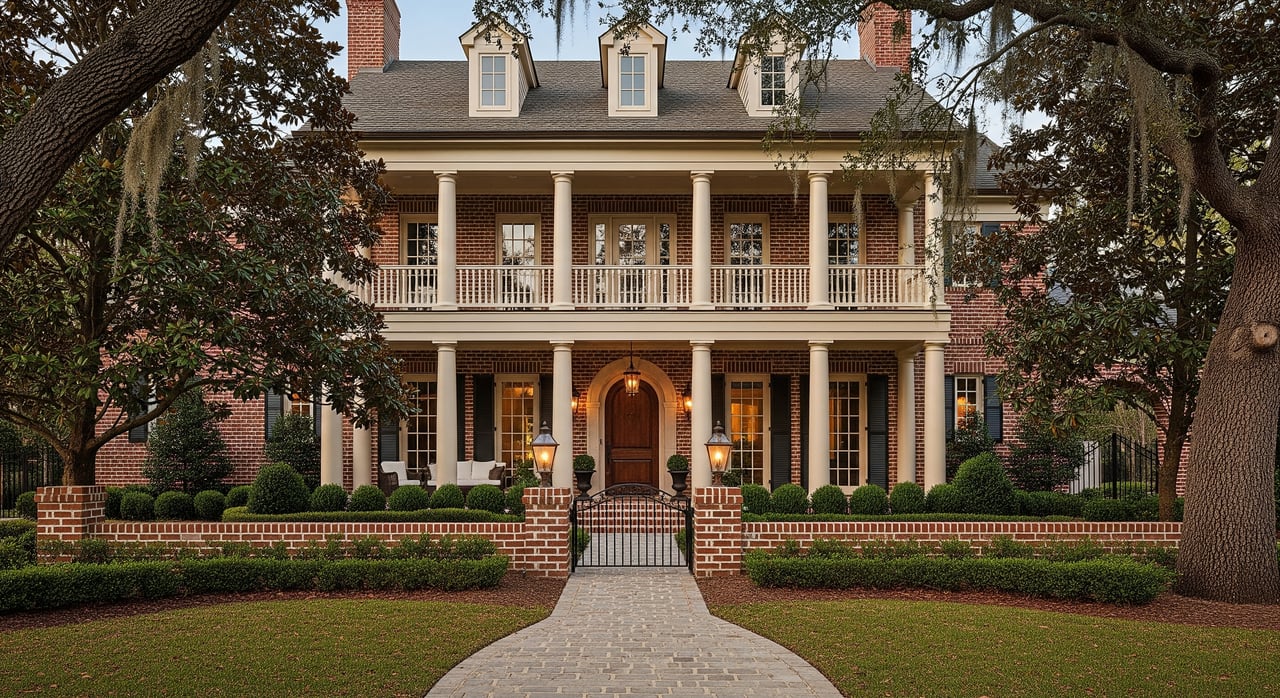
Georgian and Colonial Revival homes deliver timeless curb appeal and balanced proportions.
- Key features: a centered entry, symmetrical window layout, multi-pane double-hung windows with shutters, brick or clapboard siding, and hipped or side-gabled roofs.
- Interiors often have a central hall plan and classical trim such as crown moulding and wainscoting.
Presenting and updating well:
- Keep the façade balanced. Avoid changes that break the window rhythm or entry proportions.
- Restore trim and hardware where you can. Modern kitchens and baths work best when they respect the home’s scale.
Resale impact: Buyers value the formal look and masonry quality. Additions that disrupt symmetry can hurt perceived integrity and price potential.
New-traditional: modern living, classic look
New-traditional homes combine traditional massing with today’s floor plans.
- Key features: traditional rooflines and proportions with larger footprints, porches or dormers, and historically inspired materials.
- Interiors favor open layouts, larger kitchens, taller ceilings, and contemporary systems and comforts.
Presenting and updating well:
- Maintain the street-facing scale and rhythm so the home blends with older neighbors.
- Inside, highlight the open plan and amenities while keeping trim profiles and details classic.
Resale impact: This blend often commands strong interest because it delivers modern function without losing neighborhood compatibility.
Related styles you may see
Established Texas neighborhoods often feature a mix of period homes. You may encounter:
- Ranch or mid-century: one story, low-pitched roofs, broad façades. Easy to update, but check slab foundations and original systems.
- Craftsman or bungalow: generous porches, tapered columns, exposed rafter tails. Strong curb appeal when preserved.
- Local vernacular: details adapted for Texas climate, such as raised porches, metal roofs, and deeper overhangs for shade.
Lots, streets, and trees: what to expect
Older Texas neighborhoods share common lot and streetscape patterns that shape how homes live and show.
- Lot sizes vary by plat and era, so confirm dimensions before planning additions. Short front setbacks and side driveways to rear or side garages are common in established areas.
- Many streets follow a grid or modified grid, with homes oriented to the street and porches that connect to the sidewalk.
- Mature trees are a major asset. Shade helps with comfort and energy use and adds to first impression. Plan landscaping with drainage and wind in mind.
Climate and maintenance:
- In humid subtropical conditions, manage moisture, inspect for termites, and choose durable roofing with appropriate wind ratings.
- Energy upgrades such as insulation, right-sized HVAC, and better window performance can deliver meaningful comfort and ROI.
- Always confirm whether the property is in a flood-prone area and review local elevation requirements before investing in improvements.
How style influences presentation and price
A clear style story helps you stage, photograph, and market your home for top results.
Style-aligned staging:
- Tudor, Georgian, Craftsman: use understated color palettes that let trim, windows, and fireplaces shine. Keep window treatments simple to reveal proportions.
- New-traditional: spotlight the open plan, island seating, and indoor-outdoor flow while keeping exterior details crisp and classic.
High-impact, low-cost fixes:
- Refresh or restore original trim, doors, and porch elements instead of replacing them with off-style parts.
- Update lighting and hardware with fixtures that complement the period cues.
- Landscape to frame the entry and roofline. Keep plantings scaled to porch height so architecture stays in view.
Photography and listing tips:
- Capture rooflines, porch depth, and symmetry or asymmetry that define the style.
- Use detail shots of original brick, timber, windows, and fireplaces to communicate authenticity.
Resale and appraisal considerations
Architectural integrity often translates to measurable value in character neighborhoods.
- Preserved or well-replicated period details can support stronger pricing compared to inconsistent modernizations.
- Be careful with “historicizing” renovations that get proportions or materials wrong. They can reduce appeal.
- Windows are a common decision point. Restoration preserves character. When replacement is necessary, choose units that match original sightlines and muntin profiles.
- Kitchens and baths drive ROI. Finish choices that respect scale and style show best.
Permits, restrictions, and timelines
Plan ahead for approvals so your project stays on track.
- Exterior changes such as windows, siding, roof materials, and porches often require permits and, if present, HOA architectural review.
- Historic or conservation rules, if applicable, can add steps. Build in 4 to 12 weeks or more for reviews.
- Sellers should disclose known restrictions and past approvals. Buyers should ask for recent examples of similar approved work.
Your next steps in Southampton, Liberty
Turn your style knowledge into a smart plan for value.
- Verify the exact subdivision name, governing body, and any HOA or deed restrictions for your address.
- Pull several recent comparable sales on your street or nearby blocks and note style, finish level, and lot size.
- Walk the block to confirm dominant materials, rooflines, and porch patterns so any updates fit the look.
- Consult preservation-aware contractors or architects for cost comparisons of restoring versus replacing signature elements.
Ready to position your home for top results with designer-led staging, professional photography, and smart, style-sensitive updates financed through Concierge where eligible? Connect with Lee Kaplan for a tailored plan that fits your Southampton property and goals.
FAQs
How do I tell a true Tudor from a Tudor-inspired home in Southampton, Liberty?
- Look for steep roof pitches, authentic half-timbering with stucco infill, grouped casement windows, and a prominent chimney. Many later homes borrow select details without the full structure.
Which updates deliver the best ROI while respecting style in Southampton, Liberty?
- Prioritize kitchens and baths with scale-appropriate finishes, restore porches and trim, repair masonry, choose quality roofing, and invest in HVAC and insulation for comfort.
Are there deed restrictions or historic rules for Southampton, Liberty homes?
- Possibly. Confirm HOA or civic rules, recorded covenants, and any local historic or conservation overlays before exterior changes.
Should I restore original windows or replace them in an older Southampton home?
- Restoration preserves character and often buyer appeal. If replacement is necessary, choose high-quality units that match original proportions and profiles.
What lot and garage patterns should I expect in established Texas neighborhoods like Southampton?
- Many older areas feature shorter front setbacks, side driveways, and detached or rear-positioned garages. Confirm specifics with plat maps and local records.
How does Texas climate affect maintenance and value for Southampton properties?
- Plan for moisture management, termite inspections, durable roofing with good wind ratings, and energy upgrades. Mature trees are assets that also need care for storm resilience.